The U.S. war against Iran, now nearly two weeks old, is putting steady pressure on financial markets as oil prices climb, bond yields rise, and economists cut their growth outlooks.
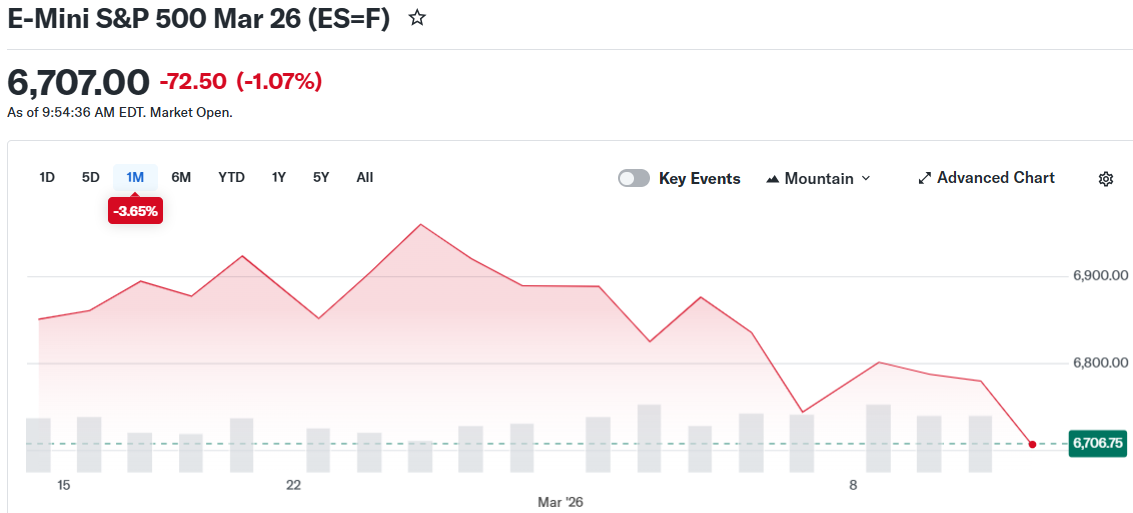
The S&P 500 has fallen about 1.4% since U.S. strikes on Iran began in late February. The index is still only about 3% below the record high it hit in January, but analysts warn the situation could get worse if the conflict drags on.
Crude oil prices jumped sharply this week after Iran-backed forces struck tankers in the Strait of Hormuz. Around 20% of the world’s daily oil supply passes through the strait. Three vessels were hit in the area on Wednesday alone.
The International Energy Agency made a historic move to release 400 million barrels of emergency oil reserves to ease supply concerns. Despite that, traders don’t expect oil prices to return to pre-war levels until August 2027, according to futures markets.
President Trump also said he would use Defense Production Act powers to restart oil production off the California coast. Trump had earlier said the conflict would be “over very soon,” but Goldman Sachs and other firms are now planning for a longer disruption.
Goldman Sachs revised three key economic forecasts this week, all tied to the Iran conflict. The bank now expects faster inflation, slower economic growth, and higher unemployment.
Ten-year Treasury yields rose to around 4.23%, a jump of 24 basis points from late February. Thirty-year bond yields climbed to 4.9% in early Thursday trading. Analysts say the move reflects concerns about looser fiscal policy and uncertainty around the inflation and interest rate outlook.
The Federal Reserve is already in a difficult spot. Higher oil prices push inflation up, which could force the Fed to keep rates higher for longer, reducing the chance of rate cuts this year.
ING analyst Francesco Pesole said emergency oil reserve releases may actually be sending a negative signal to markets. He said it suggests world leaders see little chance of a quick end to the conflict.
Iran still has short-range missiles, drones, and naval mines it can use to disrupt tanker traffic. Analysts say fully reopening the Strait of Hormuz could require ground troops — a major escalation.
Iran also holds a stockpile of 60% enriched uranium, close to weapons-grade. Experts at the Nuclear Threat Initiative warn that if the Iranian regime survives the war, it may have both the means and the motivation to build nuclear weapons.
Gulf states, heavily exposed to Iranian attacks and dependent on U.S. air defenses, are growing frustrated with Washington behind the scenes. Several analysts say the region faces two bad outcomes: an Iran that survives and rebuilds, or a dangerous power vacuum.
Wall Street is not yet changing its end-of-year targets for the S&P 500, which still call for a 14% rise from current levels. However, analysts say the market has been stuck in a 4% trading range for 14 weeks.
The post What the Iran Conflict Means for the U.S. Stock Markets in 2026 – Goldman Sachs Weighs In appeared first on CoinCentral.





