A vessel fire in the strategically vital Strait of Hormuz has propelled European natural gas valuations significantly higher, sparking renewed anxiety over the security of global LNG supply chains.
The front-month Dutch gas futures contract, serving as Europe’s primary benchmark, advanced 3.45% during Monday’s trading session. Britain’s wholesale gas contract climbed 3.52% in parallel. Both indices touched their strongest points since March 23.
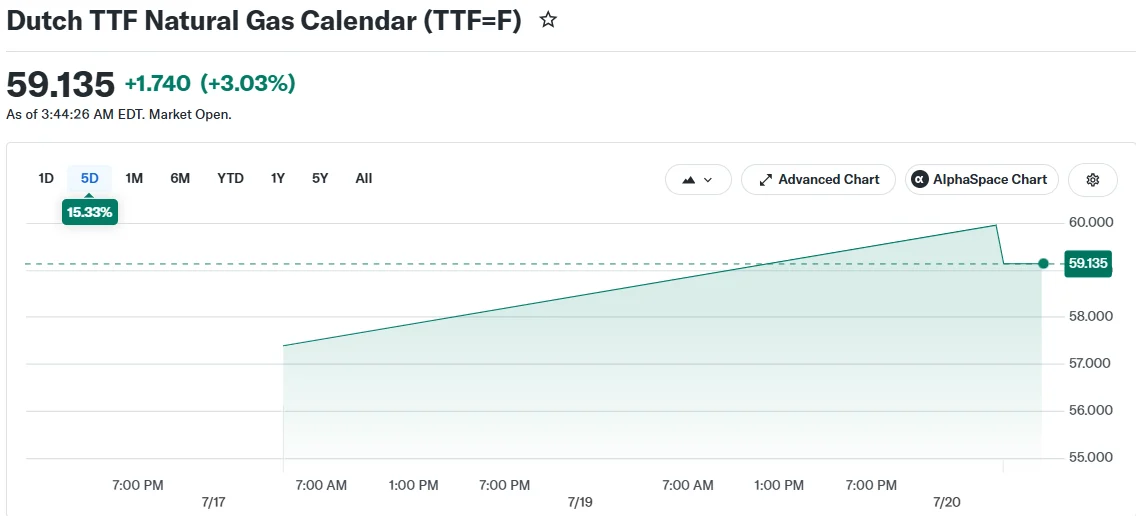
The upward price movement followed news that a commercial tanker was engulfed in flames after being struck in the Strait of Hormuz. This narrow waterway represents one of the planet’s most critical corridors for energy transportation.
Roughly 20% of the world’s liquefied natural gas shipments transit through the Strait of Hormuz. The majority of these deliveries originate from prominent Gulf region producers. Any potential disruption to this passage immediately heightens concerns across European energy trading floors.
European nations have grown increasingly dependent on seaborne LNG deliveries in recent times. This shift occurred as Russian pipeline gas volumes plummeted dramatically in the aftermath of the Ukraine conflict. The region now relies substantially on imported LNG to maintain residential heating and industrial operations.
Crude oil prices similarly advanced during the session, gaining 2.2%. This upward movement elevated oil-linked gas contracts in tandem, compounding the overall price momentum.
Market participants indicated that LNG shipments continue to navigate through the strait, though under enhanced security protocols. The risk environment has fundamentally shifted, despite cargo movements remaining intact for now.
War-risk insurance premiums have escalated substantially. Insurance providers are incorporating the elevated risk associated with active security threats in the region. These additional expenses translate directly into higher European wholesale gas prices.
The timing presents challenges for European energy companies. They are entering a phase when supply interruptions could produce disproportionate effects on continental pricing structures.
Energy markets are now monitoring intensely whether conditions in the Strait of Hormuz deteriorate further. Any prolonged interruption to LNG transit through the waterway could elevate prices substantially beyond current levels.
The Dutch front-month futures contract serves as the principal pricing benchmark for European gas commerce. Monday’s rally represented a multi-month peak and demonstrated how rapidly geopolitical developments can transform energy market dynamics.
At present, LNG deliveries remain operational, but the market has already incorporated risk premiums. Energy traders and utility companies will maintain close surveillance of developments in coming days.
Monday’s market movement underscored how vulnerable European energy systems remain to Middle Eastern events, especially along strategic shipping passages such as the Strait of Hormuz.
The post Strait of Hormuz Tanker Attack Sends European Gas Prices Soaring to Highest Point in Months appeared first on Blockonomi.





